
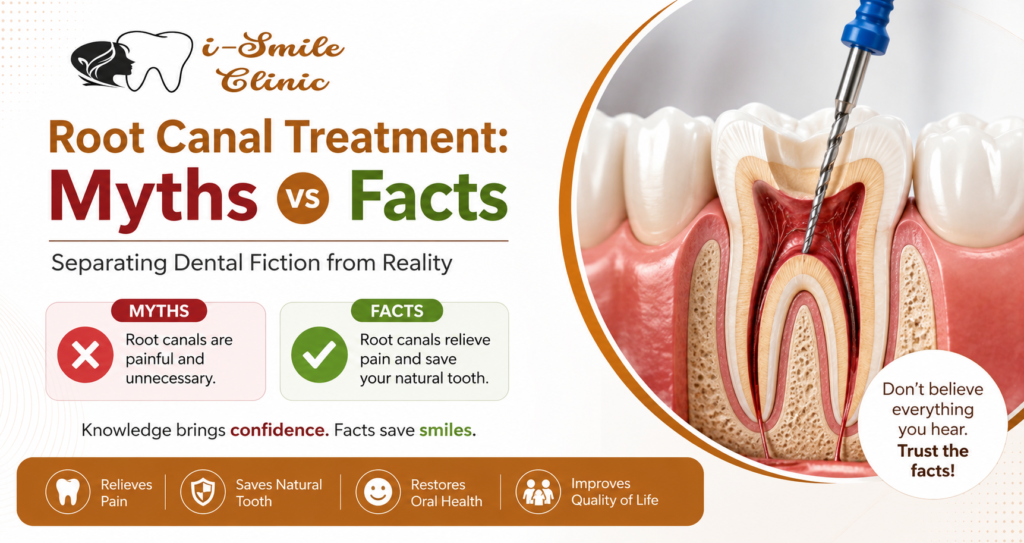
When people hear the words Root Canal Treatment, the first reaction is often fear. Stories shared by friends, outdated internet articles, and misconceptions on social media have created an image of root canal treatment that simply doesn’t reflect modern dentistry. As a result, many people delay treatment until the pain becomes unbearable.
The truth is that Root Canal Treatment is designed to save your natural tooth and eliminate infection—not create more discomfort. Thanks to advances in dental technology and anesthesia, today’s procedure is significantly more comfortable and predictable than many people imagine.
In this guide, we’ll clear up the biggest myths surrounding root canal treatment and explain the facts every patient should know before making a decision about their oral health.
Why Is Root Canal Treatment Recommended?
Inside every tooth is a soft tissue called the dental pulp, which contains nerves, blood vessels, and connective tissue. If bacteria enter this area because of deep decay, repeated dental work, trauma, or cracks in the tooth, the pulp becomes inflamed or infected.
Without timely treatment, the infection can spread beyond the tooth, causing swelling, severe pain, and damage to the surrounding bone.
Root Canal Treatment removes the infected tissue while preserving the natural tooth, allowing you to continue chewing and smiling confidently.
Myth 1: Root Canal Treatment Is More Painful Than the Toothache
Fact: The treatment relieves pain—it doesn’t create it.
One of the biggest misunderstandings is that root canal treatment is extremely painful. In reality, most patients seek treatment because the infection itself is causing severe discomfort.
Modern local anesthesia ensures that the affected tooth remains numb throughout the procedure. Many patients are surprised that the appointment feels similar to receiving a routine filling.
Instead of causing pain, the treatment removes the source of the infection responsible for the toothache.
Myth 2: Pulling the Tooth Is the Better Option
Fact: Keeping your natural tooth is almost always the preferred choice.
Although extraction may appear to be a simple solution, losing a tooth often creates additional dental challenges.
Removing a tooth may lead to:
- Difficulty chewing certain foods
- Shifting of neighboring teeth
- Jawbone shrinkage over time
- Additional expenses for implants, bridges, or dentures
Saving the natural tooth through Root Canal Treatment helps preserve your bite, appearance, and long-term oral health.
Myth 3: Root Canal Treatment Doesn’t Last Long
Fact: A well-treated tooth can remain healthy for decades.
Many people assume a root canal is only a temporary fix. However, the success of the procedure depends largely on proper restoration and regular oral care.
Once the tooth is cleaned, sealed, and protected with a suitable restoration—often a crown—it can continue functioning like any other healthy tooth.
Maintaining good brushing habits, flossing, and routine dental check-ups significantly increases its lifespan.
Myth 4: If My Tooth Stops Hurting, There’s No Need for Treatment
Fact: The infection may still be progressing silently.
Pain is only one sign of dental disease. Sometimes the infected nerve dies, temporarily eliminating discomfort, but bacteria continue damaging the surrounding tissues.
Ignoring the problem can result in:
- Dental abscess formation
- Swollen gums or face
- Bone infection
- Eventual tooth loss
A professional examination is the only reliable way to determine whether treatment is still necessary.
Myth 5: Every Root Canal Requires Multiple Long Appointments
Fact: Many treatments are completed much faster than people expect.
Advances in digital diagnostics and rotary endodontic systems allow many uncomplicated root canal procedures to be completed efficiently.
The number of visits depends on factors such as:
- The severity of infection
- Number of roots involved
- Existing swelling
- Complexity of the tooth’s anatomy
Your dentist will recommend the treatment plan best suited to your individual case.
Myth 6: Root Canal Treatment Weakens the Tooth
Fact: The tooth can remain strong when restored correctly.
After the infected pulp is removed, the tooth no longer contains living nerve tissue, but it still remains firmly attached within the jaw.
For teeth that experience heavy chewing forces—especially molars—a dental crown is often recommended to improve strength and reduce the risk of fractures.
With proper care, the restored tooth continues to function naturally.
How Can You Tell If You Might Need Root Canal Treatment?
Many dental infections begin quietly before becoming painful. Common warning signs include:
- Persistent or throbbing toothache
- Sharp pain while chewing
- Sensitivity that lingers after hot or cold foods
- Swelling near the affected tooth
- Gum boil or pimple-like swelling
- Tooth discoloration after injury
- Bad taste caused by drainage from an infected tooth
If you notice any of these symptoms, scheduling a dental evaluation promptly can help prevent more extensive treatment later.
What Actually Happens During Root Canal Treatment?
Although each case is unique, the procedure generally follows these steps:
- Examination and digital imaging to assess the tooth.
- Local anesthesia to ensure patient comfort.
- Creation of a small opening in the tooth.
- Careful removal of infected pulp tissue.
- Cleaning and shaping of the root canals.
- Sealing the canals with a biocompatible filling material.
- Restoring the tooth with a permanent filling or crown.
The goal is to eliminate infection while preserving as much healthy tooth structure as possible.
FAQs:
Is Root Canal Treatment safe?
Yes. Modern root canal procedures are clinically proven, routinely performed, and designed to remove infection while preserving the natural tooth.
Can I eat after treatment?
Once the numbness wears off, you can eat soft foods. Avoid chewing hard foods on the treated tooth until your dentist confirms it has been fully restored.
How long does recovery take?
Most patients return to normal daily activities within 24 hours, although mild tenderness during chewing may last a few days.
Will I need antibiotics?
Not every patient requires antibiotics. They are usually prescribed only when there is significant swelling or a spreading infection.
Can the same tooth become infected again?
Although uncommon, reinfection can occur if the tooth fractures, develops new decay, or the restoration becomes damaged. Regular dental check-ups help identify these issues early.
How to Reduce Your Risk of Needing Root Canal Treatment
The best treatment is prevention. Healthy daily habits significantly lower your chances of developing deep tooth infections.
Simple preventive measures include:
- Brushing twice daily with fluoride toothpaste
- Cleaning between teeth every day
- Reducing sugary snacks and beverages
- Wearing a mouthguard during sports
- Treating small cavities before they become severe
- Visiting your dentist for routine examinations and professional cleanings
Preventive care is often simpler, less invasive, and more affordable than treating advanced dental disease.
Why Patients Trust i-Smile Clinic
At i-Smile Clinic, every treatment plan is tailored to the patient’s individual needs. Our focus is not only on eliminating infection but also on ensuring comfort throughout the process.
Our approach includes:
- Comprehensive diagnosis using modern imaging
- Conservative treatment that preserves natural teeth
- Advanced techniques for precise cleaning of root canals
- Strict infection-control protocols
- Personalized aftercare guidance for long-term oral health
We believe that informed patients make confident decisions, which is why we take time to explain every stage of treatment before we begin.
Conclusion
The myths surrounding Root Canal Treatment have prevented countless people from receiving timely dental care. The reality is very different. Modern root canal treatment is a predictable, safe, and tooth-saving procedure that helps eliminate infection while preserving your natural smile.
If you’re experiencing persistent tooth pain, swelling, or prolonged sensitivity, don’t rely on myths or wait for the discomfort to worsen. An early dental assessment can often save your tooth and prevent more complex treatment in the future.
At i-Smile Clinic, we’re committed to helping you protect your natural teeth with comfortable, evidence-based dental care. Schedule your consultation today and take the first step toward lasting oral health.
Read More: