
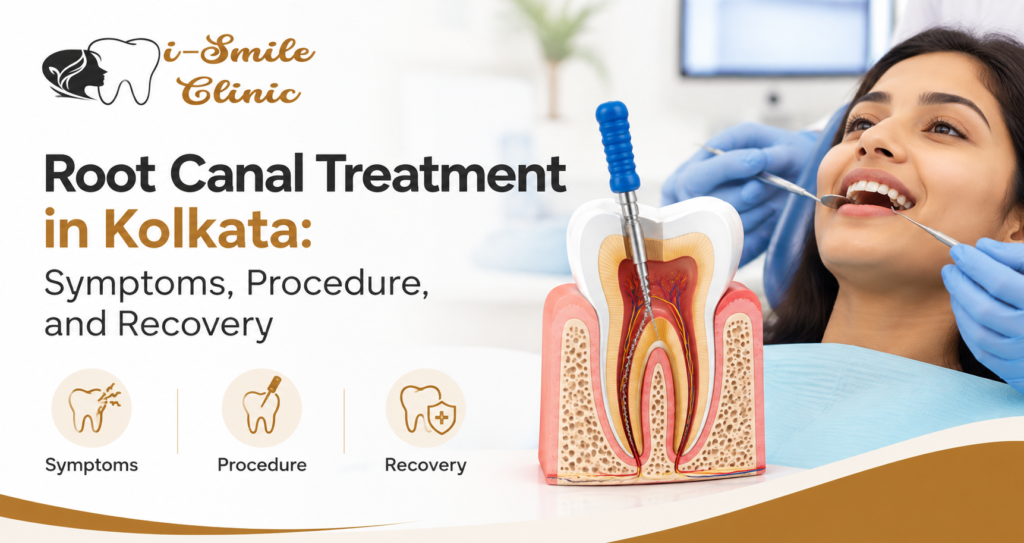
Tooth pain can turn everyday activities like eating, drinking, and sleeping into uncomfortable experiences. When the pain comes from deep inside a tooth, the problem may involve the dental pulp, which contains nerves and blood vessels. In such cases, root canal treatment in Kolkata can help remove infected tissue, relieve the source of discomfort, and preserve the natural tooth.
At i-Smile Clinic, understanding your dental condition is the first step towards choosing appropriate treatment. Whether you are experiencing persistent toothache, sensitivity, or swelling, learning about root canal treatment can help you make an informed decision about your oral health.
What Is Root Canal Treatment?
Root canal treatment, commonly called RCT, is a dental procedure used to treat infection or inflammation inside a tooth. The dentist removes the affected pulp, cleans and disinfects the internal canals, and seals them with suitable materials.
Rather than removing the entire tooth, this procedure aims to retain its natural structure. Depending on the extent of damage, a filling or dental crown may be recommended afterwards to restore strength and function.
Signs You May Need Root Canal Treatment
Recognising the warning signs early can help prevent complications. Common symptoms include:
- Persistent or throbbing toothache that interrupts sleep.
- Prolonged sensitivity to hot or cold foods.
- Pain while chewing or biting.
- Swelling or tenderness around the affected tooth.
- Darkening or discolouration of a tooth.
- A recurring gum pimple or discharge near the tooth.
Sometimes, an infected tooth causes little pain. Therefore, a dental examination and appropriate X-rays are important when symptoms suggest pulp damage.
Why Is Root Canal Treatment Necessary?
Deep cavities, cracked teeth, repeated dental procedures, or injuries can expose the pulp to bacteria. Without appropriate treatment, infection may spread into the surrounding tissues and form an abscess.
Root canal treatment removes infected tissue and helps control the source of infection while preserving the tooth. Delaying assessment can increase discomfort and make treatment more complicated. A dentist evaluates the tooth’s condition before recommending RCT or discussing alternatives.
How Does the Root Canal Procedure Work?
Understanding the treatment process can make your appointment feel less intimidating.
1. Examination and diagnosis: The dentist reviews your symptoms, examines the tooth, and may take X-rays to assess the roots and surrounding bone.
2. Local anaesthesia: The affected area is numbed to minimise discomfort during treatment.
3. Access and cleaning: A small opening allows the dentist to reach the pulp chamber. Infected tissue is removed, and the canals are carefully cleaned and shaped.
4. Disinfection and sealing: The canals are disinfected and filled with a suitable material to help prevent reinfection.
5. Final restoration: A filling or crown restores the tooth, depending on its remaining structure and chewing demands.
The number of visits depends on infection severity, canal anatomy, and the tooth’s response to treatment.
How Long Does a Root Canal Take?
Patients frequently ask, how long does a root canal take? A straightforward procedure may take approximately 60–90 minutes, although some teeth require longer appointments or multiple visits.
Front teeth often have simpler canal anatomy, while molars may contain several canals that need careful cleaning. Significant infection, difficult anatomy, or retreatment can also increase treatment time.
Your dentist can provide a more realistic estimate after examining the tooth. Remember that completing the root canal is only part of the process; a permanent restoration may require another appointment.
Laser Root Canal Treatment in Kolkata: What Should You Know?
Laser root canal treatment in Kolkata refers to techniques that use dental laser technology as an additional aid during selected stages of endodontic treatment. Depending on the system and clinical approach, lasers may assist canal disinfection or activate irrigating solutions.
Potential benefits include improved cleaning in certain areas and possible reductions in short-term postoperative discomfort. However, results depend on the equipment, treatment protocol, and individual case. Evidence remains variable, and laser technology does not automatically guarantee better outcomes.
Conventional cleaning, disinfection, and sealing remain essential components of successful RCT. Ask your dentist whether laser-assisted techniques are available, clinically appropriate, and beneficial for your particular tooth.
Is Root Canal Treatment Painful?
Modern root canal treatment is generally performed under local anaesthesia, making the procedure manageable for most patients. You may feel pressure or vibration, but sharp pain should be communicated to your dentist immediately.
Mild tenderness or sensitivity can occur for several days afterwards, particularly when the surrounding tissues were inflamed before treatment. Following your dentist’s instructions and taking prescribed medication when appropriate can help manage discomfort.
Persistent or worsening pain, increasing swelling, or fever warrants prompt professional assessment.
What Happens After Root Canal Treatment?
Recovery involves protecting the treated tooth while the surrounding tissues settle. Avoid chewing hard foods on the tooth until the dentist confirms it is safe to do so. Maintain regular brushing and flossing, and attend scheduled restoration appointments.
A crown may be recommended for teeth that have lost substantial structure, particularly back teeth exposed to strong chewing forces. Do not postpone the final restoration without discussing the risks with your dentist.
With appropriate treatment, restoration, and oral hygiene, a root canal-treated tooth can remain functional for many years.
FAQs:
1. How much is a stage 1 root canal?
The cost of stage one depends on what the dentist includes in that stage, the tooth involved, diagnostic requirements, and the complexity of treatment. There is no single fixed price for every patient. Ask your Kolkata dental clinic for an itemised estimate covering consultation, X-rays, canal treatment, and any required crown.
2. Is RCT very painful?
Usually, no. Local anaesthesia helps control pain during treatment. Temporary soreness may develop afterwards, but severe or persistent pain should be evaluated by your dentist.
3. What are the risks of a root canal?
Possible complications include persistent infection, missed canals, instrument separation, damage to tooth structure, or fracture of a weakened tooth. Some teeth may require retreatment or extraction if healing does not occur. Careful diagnosis, proper restoration, and follow-up help manage these risks.
Choose Informed Dental Care at i-Smile Clinic
Persistent tooth pain deserves attention, not guesswork. If you are considering root canal treatment in Kolkata, i-Smile Clinic can help you understand your symptoms, explore suitable treatment options, and plan the next steps for your dental health.
Book a dental consultation to discuss your condition and receive personalised advice. Early evaluation may help preserve your natural tooth and restore comfortable chewing.
Read More: