
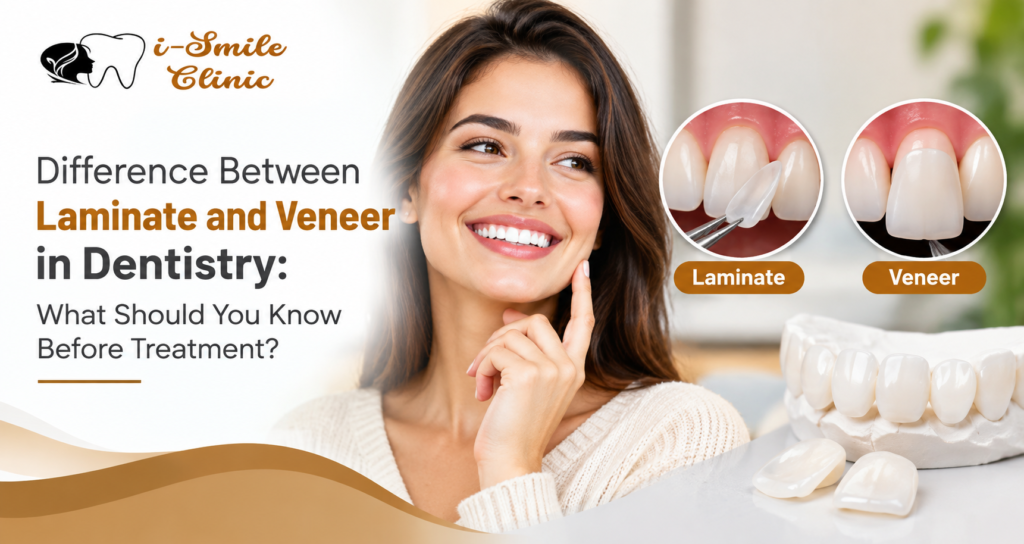
Choosing a cosmetic dental procedure can feel confusing when different clinics use similar names for treatments that appear to do the same thing. If you want to improve your smile, you may come across dental laminates, porcelain veneers, and composite veneers while researching your options. Before deciding, it is important to understand what these treatments involve and which details actually distinguish them.
The difference between laminate and veneer in dentistry is often related to terminology. A laminate usually describes a thin covering attached to the front of a tooth, while a veneer is the broader name for this type of restoration. Because the terms frequently overlap, comparing the actual treatment plan is more useful than choosing one based on its label.
This guide explains the differences, potential benefits, safety considerations, and questions to discuss with your dentist before undergoing cosmetic treatment.
Start With Your Smile Concern, Not the Treatment Name
The right cosmetic procedure depends on what you want to change and why the problem exists. Two people who want brighter-looking teeth, for example, may need entirely different treatments.
Someone whose teeth are healthy but naturally yellow may benefit from professional whitening. A person with a chipped front tooth may need a restoration to rebuild its shape. Persistent discolouration, uneven tooth proportions, or selected gaps may lead a dentist to consider laminates or veneers.
This distinction matters because cosmetic dentistry should address the cause of the concern rather than simply cover its appearance. Your dentist must also evaluate tooth structure, gum condition, existing fillings, and your bite before recommending a procedure.
Dental Laminates: Understanding Their Purpose
A dental laminate is a customised layer placed over the visible surface of a tooth to modify its appearance. Depending on the material and clinical requirements, it may help create a more consistent tooth colour, refine an uneven outline, or disguise selected surface imperfections.
Imagine that one front tooth appears shorter than its neighbour because of minor wear. A carefully planned restoration may improve the visual balance between them. Similarly, certain stains that remain noticeable after other appropriate treatments may be managed with a suitable covering.
However, a laminate cannot solve every cosmetic or functional problem. Teeth affected by extensive decay, inadequate supporting structure, or serious bite difficulties may require another approach. The dentist must determine whether the tooth can support the restoration safely.
Dental Veneers: When Might They Be Considered?
Veneers are restorations bonded to the front surfaces of teeth to change their visible characteristics. They can be designed to adjust colour, contour, proportions, and the appearance of minor irregularities.
Porcelain and composite resin are two commonly used material options. Porcelain can provide lifelike light reflection and generally offers good resistance to staining. Composite resin can sometimes be applied directly to the tooth and may be easier to repair, although its maintenance and appearance can differ.
A veneer is not simply a decorative shell. Its design must work with the natural tooth and the patient’s bite. Excessive biting pressure, teeth grinding, or unsuitable preparation can compromise the result.
What Is the Main Difference Between Laminate and Veneer?
The main difference is that laminate commonly describes a thin form of dental covering, whereas veneer is the wider clinical and everyday term for a restoration placed on the front of a tooth. In many practices, the two words describe overlapping treatments rather than separate procedures.
For this reason, there is no universal rule that every laminate is safer, thinner, or more advanced than every veneer. Ask your dentist to describe the proposed restoration in specific terms.
Consider these five factors:
- Material: Find out whether the restoration will use porcelain, composite resin, or another suitable material.
- Preparation: Ask whether natural enamel must be reshaped and how much tooth structure may be removed.
- Purpose: Establish whether the treatment addresses colour, shape, minor spacing, or another concern.
- Maintenance: Understand the cleaning requirements, repair options, and expected future costs.
- Clinical suitability: Confirm that your teeth, gums, and bite are appropriate for the proposed procedure.
These details provide a clearer basis for comparison than the treatment name alone.
Why Do Dentists Advise Veneers?
Dentists may recommend veneers when changing the visible surface of a tooth is an appropriate way to achieve a patient’s cosmetic goals.
For example, a person with uneven tooth contours may want a more balanced smile. Another patient may have discolouration that is unlikely to respond adequately to whitening. Selected chips, worn edges, and small gaps may also be considered for treatment using veneers.
The decision should involve more than appearance. Your dentist needs to establish whether the tooth is healthy enough for a veneer and whether a less invasive alternative could produce a satisfactory result.
Veneers are not substitutes for orthodontics when substantial tooth movement is required. They also do not treat active decay or gum disease. Where another condition is present, that problem generally needs attention before cosmetic treatment is considered.
Is Teeth Lamination Safe?
Patients frequently ask, is teeth lamination safe? The answer depends on the patient’s dental condition, the preparation required, and the quality of clinical planning.
One important consideration is enamel removal. If a procedure requires enamel to be removed, the change is permanent. Some patients may also experience sensitivity, gum irritation, chipping, or loosening of the restoration.
People who grind their teeth or have an unsuitable bite may face a greater risk of restoration damage. Existing dental problems can also affect whether the treatment is appropriate.
Before agreeing to treatment, ask your dentist to explain the potential risks, available alternatives, and likely maintenance requirements. A responsible treatment plan should prioritise healthy tooth structure rather than pursuing a cosmetic result at any cost.
How Is the Treatment Planned and Completed?
Cosmetic treatment usually starts with a consultation to identify your priorities and assess oral health. Your dentist may examine your bite, review existing restorations, and use photographs or digital scans to plan the proposed result.
If treatment is appropriate, the next stage involves selecting the material, shade, and shape. Some restorations require preparation before a laboratory creates the final piece. Other techniques, particularly direct composite treatments, may involve shaping material on the tooth itself.
The restoration is then fitted or bonded according to the selected technique. Your dentist checks its appearance, comfort, and interaction with opposing teeth.
The number of appointments varies with the material, preparation, and complexity of the case. Ask for an individual treatment schedule rather than relying on a general promise about completion time.
Protecting Your Smile After Treatment
Restorations still need everyday care. Brush twice a day using fluoride toothpaste, clean between your teeth, and attend regular dental examinations.
Avoid biting hard objects with restored front teeth. If you clench or grind your teeth, discuss whether a protective night guard is appropriate. Contact your dentist if a restoration feels loose, develops a rough edge, or causes ongoing discomfort.
Good hygiene is especially important around the edges of a restoration because the underlying tooth remains vulnerable to decay. Cosmetic treatment does not replace preventive dental care.
FAQs:
1. What is the main difference between laminate and veneer?
A laminate generally refers to a thin covering, while veneer is the broader term for a restoration attached to the front of a tooth. The terms are often used interchangeably.
2. Is teeth lamination safe for everyone?
No. Suitability depends on tooth structure, gum health, bite conditions, and individual oral health needs. A dental examination is necessary before treatment.
3. Why do dentists advise veneers instead of teeth whitening?
Veneers can change tooth shape and conceal certain imperfections as well as alter visible colour. Whitening changes natural tooth colour but does not reshape teeth or cover chips.
4. Can laminates or veneers damage natural teeth?
Preparation may permanently remove enamel, and complications such as sensitivity or restoration failure can occur. The risks depend on the treatment and individual circumstances.
5. Which is more suitable for a smile makeover?
Neither option is automatically superior. The appropriate choice depends on the desired result, available materials, tooth condition, and the amount of preparation needed.
Conclusion
Cosmetic dental treatment should be chosen through careful assessment rather than terminology or appearance alone. Understanding the difference between laminate and veneer in dentistry helps you focus on the factors that influence suitability, tooth preservation, and long-term maintenance.
If you are considering a smile makeover, i-Smile Clinic can be your starting point for discussing your concerns with a dental professional. Ask about conservative alternatives, restoration materials, and the expected treatment process so that your decision supports both your smile goals and your oral health.
Read More: