
We’ rather fix it now than later and not just because it’s easier for us. Because it’s a lot easier for you.
A cavity caught early is twenty minutes in the chair. That same cavity left alone for six months is a very different appointment, and one neither of us wants to have. We see this play out at i-Smile Clinic regularly. The tooth starts giving little signals, a twinge here, some sensitivity there, and life is busy, so it gets filed under “deal with later.” Then later arrives and the problem has grown considerably.
Cavity dental filling is one of the most routine things we do. When we catch decay early the whole experience is genuinely quick and easy. The part that makes it harder is waiting.
What Happens If You Leave It?
Decay moves inward. It starts at the outer enamel layer, which is the easy stage, moves into the dentine underneath where sensitivity usually starts, and if it keeps going it hits the nerve. At that point a filling isn’t the treatment anymore.
The difference between a quick filling and a root canal is often just a few months. We’d rather see you for the quick one.
What We Actually Do?
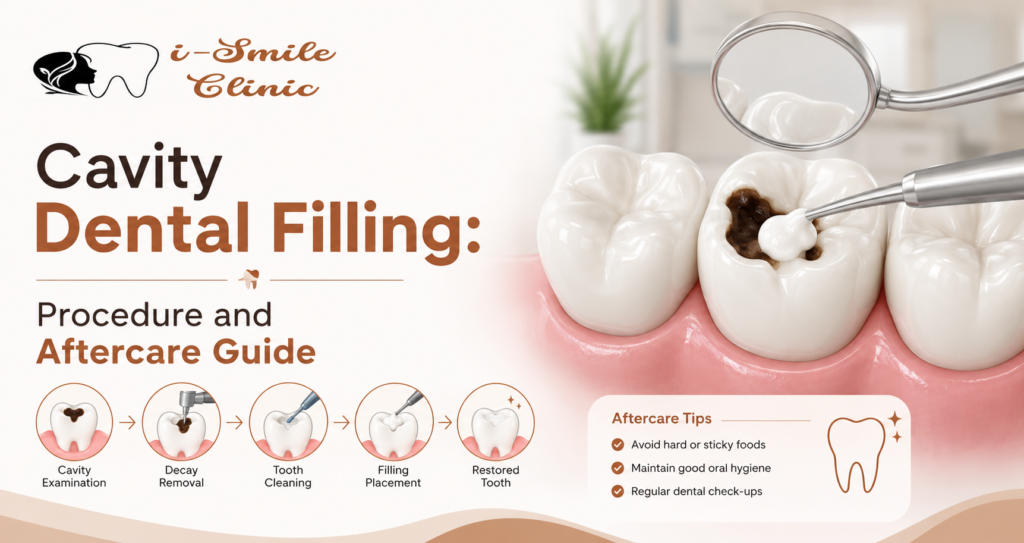
We numb the area first. Once the anaesthetic is working, you’ll feel pressure but nothing sharp. We remove what’s decayed, clean the space, and place the filling.
Tooth-coloured composite fillings, which are what we use for most cavities, set hard under a small UV light in seconds. We shape and polish it so it feels natural when you bite down. Most patients are in and out in thirty to forty-five minutes and spend the rest of the day wondering why they put it off.
Some sensitivity for a day or two after is normal. Genuinely, by day two most people have completely forgotten about it.
Which Type of Filling We Use and Why?
Composite resin: It is our most common choice. Tooth-coloured, bonds directly to the tooth, looks like nothing happened. It’s improved a lot over the last ten years and handles most cavities well.
Amalgam: It is the old silver filling, is still genuinely good for back teeth that take heavy biting force. It’s not pretty but it lasts a long time and in the right situation it’s still the right call.
Glass ionomer: It is one we reach for in children’s teeth and in cavities near the gum line. It releases fluoride into the surrounding tooth which gives some extra protection against further decay. Not our first choice for large cavities but very useful in the right cases.
Ceramic: It is the premium option. Porcelain-based, very natural-looking, stronger than composite for bigger restorations. It costs more. It also lasts longer and looks better doing it.
We pick based on where the cavity is, how large it is, and what we think the tooth needs.
How Long You Can Expect It to Last?
Composite fillings, seven to ten years typically. Amalgam, fifteen years or more. Ceramic, ten to fifteen years.
What shortens all of them: grinding teeth at night, not coming in for check-ups, and letting new decay form around the edges. What keeps them going: brushing properly and seeing us regularly so we catch small things before they become bigger things.
What We Tell Patients After the Appointment?
Wait a couple of hours before eating on that side. The filling is already set but the area is still numb and chewing on a numb cheek ends badly.
If your bite feels high when you close your teeth together, call us the same day. A bite sitting even slightly off causes jaw discomfort over time and fixing it takes five minutes. Don’t sit with it for a week assuming it’ll settle.
Sensitivity to cold or sweet for a few days is completely expected. Still there after a week? Come back in.
FAQs:
Is a cavity filling painful?
The injection is the worst part and it’s over in a few seconds. After that you feel pressure during the procedure, not pain. Post-filling sensitivity is mild and temporary. We hear “that was much easier than I expected” more than anything else.
What are the four types of fillings?
Composite resin, amalgam, glass ionomer, and ceramic. We explain which one we’re recommending and why before we start. You should always know what’s going in your tooth.
How long does a filling last?
Seven to fifteen years depending on material and how the tooth gets looked after. We check your fillings at every appointment, so nothing fails without us catching it first.
The Honest Version
Small cavity, quick visit, done. That’s how most of these should go and it’s how they do go when patients come in before things get complicated.
At i-Smile Clinic we handle cavity dental filling from the simple early cases through to larger restorations. If a tooth has been bothering you or your last check-up was a while ago, come in and let us have a look. Almost certainly easier than you’re imagining.
Read More:
- How Many Sitting Required for Root Canal Treatment? Complete Guide to RCT Visits
- Efficient Endodontics | Single Sitting Root Canal Treatment
Visit Us: