Wisdom teeth are the last set of molars to develop, usually emerging between the ages of 17 and 25. While some people experience no issues, many find that these teeth do not have enough space to erupt properly. As a result, wisdom teeth can become impacted, infected, or cause damage to neighboring teeth.
Ignoring the early warning signs may lead to persistent pain, swelling, difficulty chewing, and even serious oral infections. Fortunately, Wisdom Tooth Removal is a safe and commonly performed dental procedure that helps prevent long-term complications and protects your overall oral health.
In this comprehensive guide, you’ll learn the signs that indicate you may need wisdom tooth removal, the treatment process, recovery tips, and answers to the most frequently searched questions online.
What Is Wisdom Tooth Removal?
Wisdom Tooth Removal is a dental procedure performed to extract one or more third molars that are causing pain, infection, crowding, or other oral health problems.
Not every wisdom tooth requires removal. If the tooth grows normally, is easy to clean, and does not affect surrounding teeth, your dentist may simply monitor it during regular check-ups. However, when complications develop, timely removal is often the best solution.
Why Do Wisdom Teeth Often Cause Problems?
Unlike other permanent teeth, wisdom teeth erupt much later in life. By that time, the jaw is usually fully developed, leaving little or no space for these additional molars.
When there isn’t enough room, wisdom teeth may:
- Grow at an angle
- Remain trapped beneath the gums
- Push against neighboring teeth
- Partially erupt through the gum
- Create pockets where bacteria accumulate
These situations increase the risk of infection, tooth decay, gum disease, and jaw discomfort.
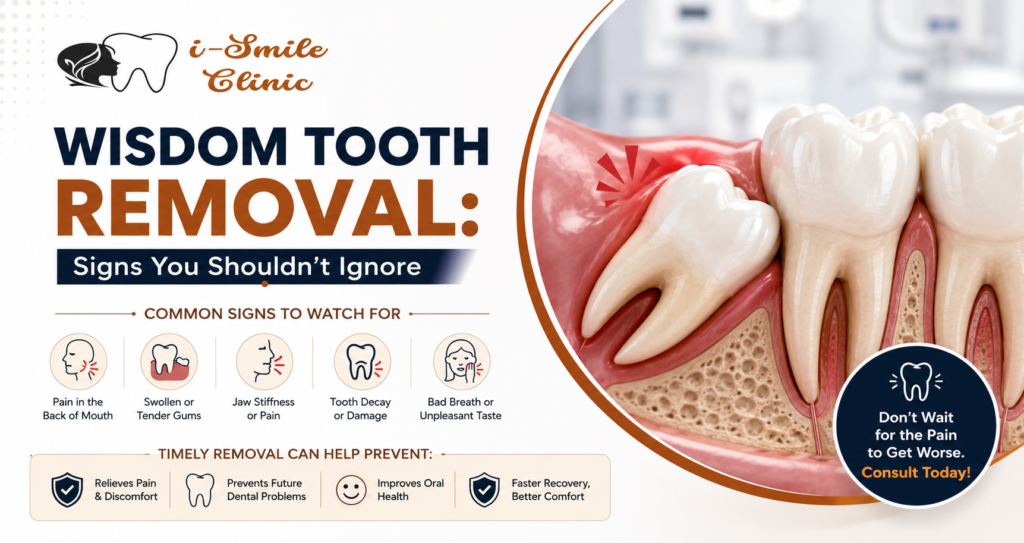
Signs You Shouldn’t Ignore
Recognizing the early symptoms of wisdom tooth problems can help prevent more complicated dental issues.
1. Persistent Pain at the Back of Your Mouth
One of the earliest signs is discomfort near the last molar. The pain may come and go initially but often becomes more frequent as the wisdom tooth continues to erupt or becomes impacted.
Pain while chewing or opening your mouth should never be ignored.
2. Swollen or Tender Gums
If the gum surrounding a wisdom tooth becomes swollen, red, or sensitive, bacteria may be trapped beneath the tissue.
This condition, known as pericoronitis, commonly develops around partially erupted wisdom teeth and requires prompt dental attention.
3. Difficulty Opening Your Mouth
Inflammation around an impacted wisdom tooth can affect the surrounding muscles, making it difficult to open your mouth fully or chew comfortably.
Jaw stiffness that lasts more than a day or two deserves evaluation by a dentist.
4. Repeated Food Trapping
Wisdom teeth positioned at awkward angles often create hard-to-clean spaces where food particles become trapped.
Over time, this can lead to:
- Tooth decay
- Gum inflammation
- Persistent bad breath
- Infection
Even excellent brushing may not completely clean these difficult areas.
5. Swelling Around the Jaw
Facial swelling near the back of the jaw may indicate an infection associated with an impacted wisdom tooth.
If swelling is accompanied by fever or severe pain, immediate dental care is recommended.
6. Bad Breath That Doesn’t Improve
Chronic bad breath or an unpleasant taste in the mouth may occur when bacteria collect around partially erupted wisdom teeth.
Persistent odor despite good oral hygiene may indicate an underlying infection.
7. Pressure on Nearby Teeth
As wisdom teeth attempt to erupt, they can press against adjacent molars.
Although wisdom teeth are not always responsible for crowding, impacted teeth may place pressure on neighboring teeth and contribute to discomfort or damage.
Common Problems Caused by Impacted Wisdom Teeth
When wisdom teeth remain untreated, they may contribute to several oral health concerns.
Tooth Decay
Food and bacteria collect around partially erupted teeth, increasing the likelihood of cavities.
Gum Infection
Inflamed gums surrounding impacted wisdom teeth are difficult to clean and can become repeatedly infected.
Damage to Adjacent Teeth
Pressure from impacted wisdom teeth may affect the roots or enamel of neighboring molars.
Cysts
In some cases, a fluid-filled sac may develop around an impacted tooth, potentially affecting surrounding bone and teeth.
Jaw Pain
Chronic inflammation may contribute to ongoing jaw discomfort and difficulty chewing.
How Does a Dentist Decide If Wisdom Tooth Removal Is Necessary?
Your dentist will evaluate several factors before recommending extraction.
These include:
- Clinical examination
- Digital dental X-rays
- Position of the wisdom tooth
- Presence of pain or infection
- Impact on nearby teeth
- Risk of future complications
Even if symptoms are mild today, removal may be advised if imaging suggests future problems are likely.
What Happens During Wisdom Tooth Removal?
Understanding the procedure often helps reduce anxiety.
Step 1: Examination and Imaging
Digital X-rays help determine the position of the tooth and surrounding structures.
Step 2: Local Anesthesia
The treatment area is completely numbed for comfort. In selected cases, additional sedation options may be discussed.
Step 3: Tooth Removal
If the tooth has erupted normally, it may be removed using a simple extraction technique.
Impacted teeth may require a small incision in the gum and, occasionally, sectioning of the tooth for safe removal.
Step 4: Cleaning the Area
The extraction site is carefully cleaned to reduce the risk of infection.
Step 5: Healing
The area may be closed with dissolvable stitches, and detailed aftercare instructions are provided.
Recovery After Wisdom Tooth Removal
Recovery varies from person to person, but most patients notice significant improvement within a few days.
To support healing:
- Rest for the first 24 hours.
- Apply an ice pack to reduce swelling.
- Eat soft foods like yogurt, soup, mashed potatoes, and smoothies.
- Stay hydrated.
- Avoid smoking and alcohol.
- Do not use a straw during the early healing period.
- Brush carefully while avoiding the surgical area.
- Take medications exactly as prescribed.
Most patients return to work or school within two to three days, depending on the complexity of the procedure.
Can Wisdom Tooth Problems Be Prevented?
Although wisdom teeth cannot be prevented from developing, regular dental check-ups allow dentists to monitor their growth before complications arise.
Routine examinations and X-rays help identify impacted wisdom teeth early, making treatment more predictable and often easier.
Maintaining excellent oral hygiene also reduces the risk of infection around partially erupted teeth.
FAQs:
How do I know if I need wisdom tooth removal?
Persistent pain, swollen gums, repeated infections, jaw stiffness, difficulty chewing, or impacted wisdom teeth seen on X-rays are common indicators.
Is wisdom tooth removal painful?
The procedure itself is performed under local anesthesia, so you should not feel pain during treatment. Mild discomfort afterward is normal and usually improves within a few days.
How long does recovery take?
Most patients recover from routine activities within two to three days, while complete healing of the gums continues over several weeks.
Should all wisdom teeth be removed?
No. Wisdom teeth that erupt normally, remain healthy, and can be cleaned effectively may not require removal. Your dentist will recommend treatment based on your individual condition.
What foods can I eat after wisdom tooth removal?
Choose soft, nutritious foods such as yogurt, smoothies, mashed vegetables, oatmeal, scrambled eggs, and soups until chewing becomes comfortable.
Why Choose i-Smile Clinic for Wisdom Tooth Removal?
At i-Smile Clinic, patient comfort and safety are at the heart of every treatment. We combine advanced diagnostic technology with a gentle approach to deliver effective wisdom tooth care.
Our advantages include:
- Experienced dental professionals
- Digital X-rays for precise diagnosis
- Modern surgical techniques
- Strict sterilization and infection-control standards
- Personalized treatment planning
- Comprehensive post-procedure care and guidance
Our goal is to make your wisdom tooth removal experience as smooth and stress-free as possible.
Final Thoughts
Ignoring the warning signs of a problematic wisdom tooth can lead to unnecessary pain, infection, and damage to surrounding teeth. Recognizing symptoms early and seeking timely dental care can prevent more complex problems in the future.
If you’re experiencing pain at the back of your mouth, swollen gums, jaw stiffness, or repeated infections, don’t wait for the condition to worsen. A professional dental evaluation can determine whether Wisdom Tooth Removal is the right solution for your oral health.
At i-Smile Clinic, we’re committed to providing safe, comfortable, and personalized dental care. Whether your wisdom tooth requires monitoring or removal, our experienced team is here to help you maintain a healthy, pain-free smile.
Read More: