
People put off root canals because of the appointments, not the procedure, this is something we hear constantly.
The actual treatment, one to two hours in the chair, local anaesthesia handling the discomfort, done. That part most patients can manage. What stops people is the thought of three separate visits stretched over three weeks, a temporary filling that sits uncomfortably in between, time off work three times, and the whole thing dragging out when they just want the tooth sorted.
Single sitting root canal treatment exists because that concern is legitimate. And the fact that most patients don’t know it’s an option is a problem worth fixing.
What Was Normal Before and Why It Changed?
Traditional root canal treatment across multiple visits made sense when the technology required it. Hand files were slow. Measuring canal depth accurately needed multiple attempts. Sealing materials needed specific conditions to set. Three sessions, a week apart each, was the process because the process needed that time.
Nickel-titanium rotary files changed the cleaning and shaping phase dramatically. Apex locators give precise canal length readings without guesswork. Warm vertical condensation seals canals more thoroughly than older cold lateral techniques. The procedure that genuinely needed three visits twenty years ago now doesn’t. The technology moved. The standard of care moved with it.
A lot of patients are still walking around with the 2005 version of this information in their heads. They arrive bracing for months. They leave surprised it’s done.
What Single Sitting RCT Is Actually Like?
One appointment and everything happens in that single appointment.
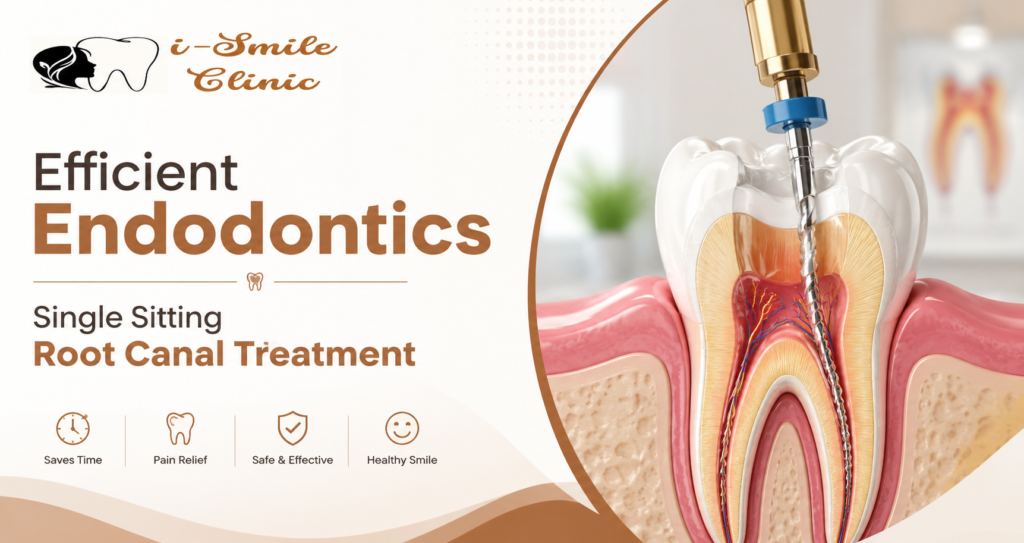
The tooth gets opened, infected pulp removed, canals cleaned and shaped with rotary instruments, irrigated thoroughly, measured precisely, then filled and sealed permanently. No temporary dressing. No coming back next Tuesday. No wondering whether the temporary filling will hold through the weekend.
Post-treatment sensitivity for a day or two is normal. Over-the-counter pain relief or a prescription if needed. Most people are eating comfortably on that side within 48 hours.
The total time in the chair is often less than the combined time across three separate shorter visits. You’re not sitting longer. You’re just sitting once.
Why It Works and What It Offers?
No temporary filling sitting in the tooth between visits. Temporary restorations are a consistent source of discomfort and the occasional crack or fall-out. Finishing in one sitting removes that entirely.
Lower risk of recontamination. A tooth that’s been opened and temporarily dressed is more vulnerable to bacterial ingress than one that’s been fully sealed. Completing treatment in one session closes that window.
One session of local anaesthesia instead of three. One round of numbness, one period of post-anaesthesia sensation returning. For patients who find the injection the hardest part, doing it once is genuinely significant.
Faster back to normal. The recovery starts immediately rather than after a third visit three weeks later.
What Are the Disadvantages of Single Sitting RCT?
Worth saying plainly because some clinics won’t.
Post-operative discomfort is slightly more common after single sitting RCT in teeth that had significant infection present beforehand. The body responds to the completed treatment and that response can be felt. It settles. It’s manageable. But patients should know to expect it rather than being surprised.
Some cases genuinely don’t suit a single sitting approach. Severely curved canals. Calcified canals with complex anatomy. Teeth with active acute abscess that needs drainage first. Pushing these cases into one visit to meet an arbitrary standard produces worse results than two well-planned visits would have. Any honest assessment of single sitting RCT has to include this.
At i-Smile Clinic, every case gets assessed before the treatment plan is set. If single sitting is appropriate, it’s done in one visit. If the anatomy or the clinical picture says otherwise, we say so and explain why rather than defaulting to a protocol that doesn’t fit.
Before You Come In
Tell us the complete history of the tooth. How long it’s been painful, whether there was swelling, any previous treatment on it. This changes what we plan and how we approach the visit.
Ask directly whether your case works for single sitting treatment. Any dentist who answers that question properly will tell you yes or no based on what they see in the X-ray and the clinical examination, not based on what’s easiest to schedule.
Don’t arrive on an empty stomach if you can help it. Managing sensitivity and recovery is easier when you’re not dealing with that on top of everything else.
FAQs:
Can a root canal be done in a single sitting?
For most straightforward cases, yes. Modern rotary instruments and sealing techniques make it possible in a way they simply weren’t before.
What is single sitting root canal treatment?
The complete cleaning, shaping, and permanent sealing of root canals in one appointment. Same outcome as staged treatment, fewer visits.
What are the disadvantages of single sitting RCT?
Slightly higher post-operative sensitivity in some cases, particularly where significant infection was present. Not appropriate for every tooth. Requires honest case selection to work well.
The Simple Version
Root canals have a bad reputation that’s mostly built on how they used to be done. Single sitting RCT is the version that fits how people actually live, one appointment, sorted, back to normal.
i-Smile Clinic does single sitting root canal treatment with proper case assessment before every procedure. If a tooth has been bothering you and you’ve been putting it off because of the time involved, it’s probably less of a commitment than you think.
Read More:
How Many Sitting Required for Root Canal Treatment? Complete Guide to RCT Visits
Visit Us: