
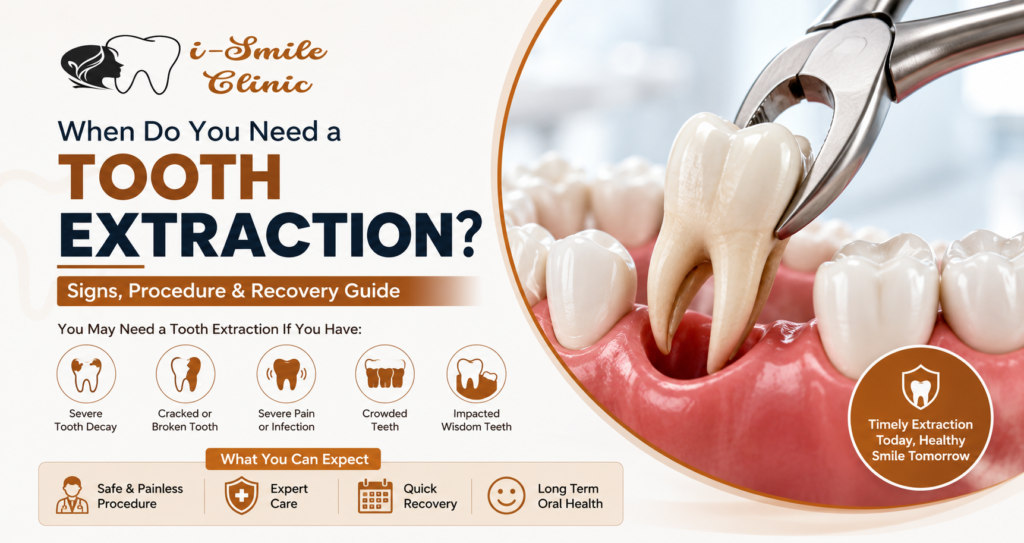
A healthy natural tooth is always the first choice in modern dentistry. Dentists make every effort to preserve damaged teeth through fillings, root canal treatment, crowns, or other restorative procedures. However, there are situations where saving a tooth is no longer possible or may even put your overall oral health at risk. In such cases, Tooth Extraction becomes the most effective solution.
Many people associate tooth extraction with pain or fear, but advances in dental techniques and anesthesia have made the procedure far more comfortable than it was in the past. Understanding when a tooth extraction is necessary can help you seek timely treatment and avoid more serious complications.
In this blog, we’ll explain the common reasons for tooth extraction, warning signs you shouldn’t ignore, the treatment process, recovery tips, and answers to the questions patients search for most often.
What Is Tooth Extraction?
Tooth Extraction is a dental procedure in which a tooth is carefully removed from its socket in the jawbone. Depending on the condition of the tooth, your dentist may perform:
- Simple Extraction – Performed when the tooth is visible above the gum line and can be removed with specialized dental instruments.
- Surgical Extraction – Required when the tooth is impacted, broken below the gum, or difficult to access, such as impacted wisdom teeth.
Before recommending an extraction, your dentist evaluates the tooth using a clinical examination and digital X-rays to determine whether it can be restored or should be removed.
When Do You Need a Tooth Extraction?
Although preserving natural teeth is always the priority, extraction may be recommended in the following situations.
1. Severe Tooth Decay
When a cavity extends deep into the tooth and destroys most of its structure, restoration may no longer be possible.
If the damage is too extensive for a filling, crown, or root canal treatment, extraction may be the safest option to prevent infection from spreading.
2. Advanced Gum Disease
Untreated periodontal disease damages the gums and supporting bone around the teeth.
As bone support decreases, affected teeth may become loose and difficult to stabilize. Removing severely compromised teeth can help protect neighboring healthy teeth.
Common symptoms include:
- Bleeding gums
- Persistent bad breath
- Gum recession
- Loose teeth
3. Impacted Wisdom Teeth
Wisdom teeth often fail to erupt properly because there isn’t enough space in the jaw.
An impacted wisdom tooth may cause:
- Pain behind the last molar
- Swollen gums
- Jaw stiffness
- Food trapping
- Repeated infections
Removing impacted wisdom teeth can prevent future complications and reduce pressure on nearby teeth.
4. Cracked or Broken Teeth Beyond Repair
Not every broken tooth requires extraction.
However, if the fracture extends below the gum line or into the root, restoring the tooth may not be possible. Extraction may be recommended to eliminate pain and infection.
5. Dental Abscess or Severe Infection
A dental abscess occurs when bacteria infect the tissues around the tooth root.
Whenever possible, dentists first consider root canal treatment to save the tooth. However, if the infection is extensive and the tooth cannot be restored, extraction may be necessary.
Ignoring an abscess can allow infection to spread to surrounding tissues.
6. Overcrowded Teeth Before Orthodontic Treatment
Some patients have insufficient space in their jaws for proper tooth alignment.
Orthodontists may recommend removing one or more teeth before braces or clear aligners to create adequate space for straightening the remaining teeth.
7. Trauma or Sports Injuries
Accidents, falls, or sports injuries can severely damage teeth.
If the root is fractured or the surrounding structures cannot support the tooth, extraction may provide the best long-term outcome.
Warning Signs You Shouldn’t Ignore
Many patients delay treatment until pain becomes unbearable.
Schedule a dental consultation if you experience:
- Persistent toothache
- Pain while chewing
- Swollen gums
- Pus around a tooth
- Loose adult teeth
- Cracked or fractured tooth
- Facial swelling
- Bad taste caused by infection
- Difficulty opening the mouth
- Continuous bleeding around a damaged tooth
Early diagnosis often allows for simpler treatment.
What Happens During a Tooth Extraction?
Understanding the procedure helps reduce anxiety.
Step 1: Examination
Your dentist examines your mouth and reviews digital X-rays to assess the tooth and surrounding bone.
Step 2: Local Anesthesia
The area around the tooth is completely numbed to ensure comfort during treatment.
Step 3: Tooth Removal
The dentist gently loosens the tooth using specialized instruments before removing it carefully.
If the tooth is impacted, a small incision may be made to access it safely.
Step 4: Cleaning the Area
The extraction site is cleaned thoroughly to remove infected tissue if necessary.
Step 5: Healing
A gauze pad is placed over the extraction site to help form a protective blood clot.
Patients receive personalized aftercare instructions before going home.
Recovery After Tooth Extraction
Healing usually begins immediately after the procedure.
Most patients recover comfortably by following their dentist’s instructions.
During the first 24 hours:
- Bite gently on the gauze provided.
- Avoid vigorous rinsing.
- Rest as much as possible.
- Apply a cold compress if swelling occurs.
For the next few days:
- Eat soft foods such as yogurt, mashed potatoes, soup, or smoothies.
- Brush carefully around the extraction site.
- Avoid smoking and alcohol.
- Take medications exactly as prescribed.
Complete healing of the gum tissue typically occurs within a few weeks, while bone healing takes longer.
How Can You Prevent Tooth Extraction?
Many extractions can be avoided with good preventive care.
Protect your teeth by:
- Brushing twice daily with fluoride toothpaste
- Flossing every day
- Limiting sugary foods and drinks
- Visiting your dentist every six months
- Treating cavities early
- Wearing a mouthguard during sports
- Managing gum disease promptly
Regular dental check-ups help identify problems before they become severe.
FAQs:
Is Tooth Extraction painful?
No. Local anesthesia keeps the area numb during the procedure. Mild soreness afterward is normal and usually manageable with prescribed medication.
How long does it take to recover?
Most people return to normal activities within one or two days. Complete healing varies depending on the type of extraction.
Can I eat after a tooth extraction?
Yes. Choose soft foods initially and avoid chewing directly on the extraction site until healing progresses.
Is it better to save a tooth instead of removing it?
Whenever possible, dentists recommend preserving the natural tooth through restorative treatments. Extraction is considered only when the tooth cannot be successfully saved.
What should I avoid after tooth extraction?
Avoid smoking, drinking through a straw, vigorous rinsing, hard foods, and intense physical activity during the early healing period.
Why Choose i-Smile Clinic for Tooth Extraction?
At i-Smile Clinic, we understand that many patients feel anxious about dental extractions. Our goal is to make the experience as comfortable, safe, and stress-free as possible.
Our patient-centered approach includes:
- Comprehensive diagnosis using digital imaging
- Gentle and minimally invasive techniques
- Modern anesthesia for patient comfort
- Strict sterilization and infection-control protocols
- Personalized treatment planning
- Detailed recovery guidance and follow-up care
Whenever possible, we explore tooth-saving treatments before recommending extraction.
Final Thoughts
A Tooth Extraction is never the first choice, but it can be the right solution when a tooth is severely damaged, infected, or affecting your overall oral health. Delaying treatment may increase pain, spread infection, and make future dental care more complex.
If you notice persistent tooth pain, swelling, loose teeth, or a damaged tooth, seek professional dental advice as soon as possible. Early diagnosis allows your dentist to determine whether the tooth can be saved or if extraction is the healthiest option.
At i-Smile Clinic, our experienced dental team is committed to providing compassionate care, accurate diagnosis, and comfortable treatment tailored to your needs. Whether you require a simple extraction or a more complex surgical procedure, we’re here to help you protect your smile and restore your oral health.
Read More: