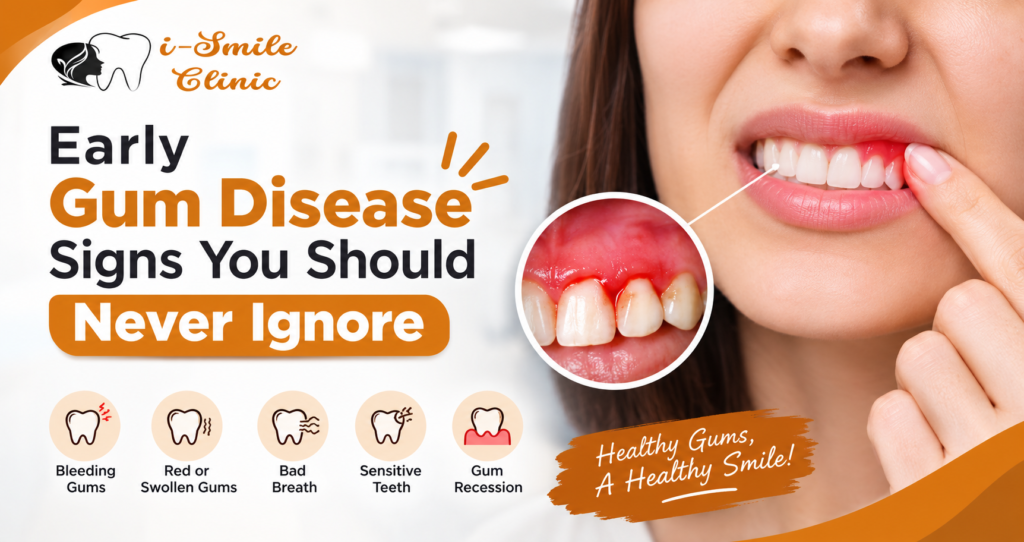
Your gums play an important role in protecting the teeth and supporting your overall oral health. However, gum disease can develop gradually, and the early symptoms are often easy to overlook.
Bleeding while brushing, swollen gums, persistent bad breath, gum recession and tooth sensitivity may seem minor, but they can be warning signs that your gums need professional attention.
The good news is that early gum disease can often be managed effectively when identified and treated promptly. Understanding the warning signs can help you protect your gums and natural teeth before the condition becomes more serious.
At I-Smile Clinic, we believe that recognising the problem early is one of the most important steps towards maintaining a healthy, confident smile.
What Is Gum Disease?
Gum disease is an infection or inflammation affecting the gums and the tissues that support your teeth. It commonly starts when plaque, a sticky layer of bacteria, builds up around the teeth and gumline.
If plaque is not removed properly, it can harden into tartar, which cannot be removed through normal brushing alone. This can irritate the gums and contribute to gum disease.
The condition generally develops in stages:
- Gingivitis: The early stage, characterised by inflamed, red or bleeding gums.
- Periodontitis: A more advanced form that can damage the tissues and bone supporting the teeth.
This is why noticing early changes in your gums should never be ignored.
7 Early Signs of Gum Disease You Should Never Ignore
1. Bleeding Gums
Bleeding while brushing or flossing is one of the most common warning signs of gum disease.
Although occasional bleeding may be caused by factors such as brushing technique, frequent or unexplained bleeding can indicate inflammation around the gums.
Do not stop cleaning the area because it bleeds. Instead, arrange a dental check-up to determine the underlying cause.
2. Red or Swollen Gums
Healthy gums are generally firm and fit closely around the teeth.
If your gums appear unusually red, puffy, swollen or tender, plaque-related inflammation could be responsible. Persistent swelling should be assessed by a dentist rather than treated as a normal part of oral hygiene.
3. Persistent Bad Breath
Bad breath that continues even after brushing, flossing or using mouthwash can sometimes be associated with gum disease.
Bacteria and plaque around the gums can contribute to an unpleasant smell or taste. However, because bad breath has several possible causes, a dental examination can help identify the real source.
4. Receding Gums
Have your teeth started to look longer than they used to?
This may happen when the gum tissue pulls away from the teeth. Gum recession can expose more of the tooth and may be associated with periodontal problems.
Receding gums can also have other causes, so professional assessment is important.
5. Tooth Sensitivity
If hot, cold, sweet or acidic foods suddenly make your teeth uncomfortable, exposed tooth surfaces may be contributing to the sensitivity.
Sensitivity does not automatically mean you have gum disease, but when it occurs together with gum recession, bleeding or swelling, it is worth getting checked.
6. Loose Teeth or Changes in Your Bite
Loose teeth can be a more serious warning sign.
Advanced periodontal disease can damage the tissues and bone that hold teeth in place. This can eventually affect tooth stability and the way your upper and lower teeth come together.
If you notice a tooth becoming loose or your bite feeling different, arrange a dental examination promptly.
7. Painful or Swollen Gums
Gum disease does not always cause significant pain, particularly during its early stages. However, painful, very swollen or increasingly uncomfortable gums should not be ignored.
Severe swelling, significant pain or loose teeth require professional dental attention.
What Causes Gum Disease?
The most common cause of gum disease is plaque buildup.
Plaque forms naturally on your teeth throughout the day. Brushing twice daily and cleaning between your teeth helps remove it. When plaque remains around the gumline, it can irritate the gums and contribute to inflammation.
Several other factors can increase the risk of gum disease, including:
- Smoking or tobacco use
- Poor oral hygiene
- Certain medical conditions
- Hormonal changes
- Genetic factors
- Inadequate cleaning between teeth
Good oral hygiene is therefore an important part of both preventing and managing gum disease.
Can You Get Rid of Gum Disease?
Yes, early gum disease can often be reversed with appropriate treatment and improved oral hygiene.
Gingivitis is the early stage of gum disease and can generally be managed when plaque and tartar are professionally removed and daily oral hygiene improves.
Advanced periodontitis is different. If the disease has already caused loss of supporting bone or tissue, the damage may not simply reverse on its own. Treatment focuses on controlling the disease, preventing further progression and protecting the teeth.
The sooner you have your gums examined, the more options you may have for managing the condition effectively.
How Do I Treat a Gum Infection?
The appropriate gum disease treatment depends on the severity and cause of the problem.
Professional Cleaning
A dentist or dental hygienist can remove plaque and tartar that cannot be effectively removed through normal brushing.
Improved Oral Hygiene
Your dental professional may recommend changes to your brushing technique and advise you to clean between your teeth using floss or interdental brushes.
Deep Cleaning
For more advanced gum disease, treatment may involve cleaning below the gumline to remove plaque and tartar from deeper areas around the teeth.
Additional Treatment
Depending on the severity of the condition, some patients may require medication, specialist periodontal treatment or other procedures.
Because gum infections can have different causes and levels of severity, self-treating with leftover antibiotics or relying solely on mouthwash is not recommended. A dental examination should come first.
Can Weak Gums Become Strong Again?
This depends on what is causing the gum weakness.
If your gums are inflamed because of plaque buildup and early gingivitis, professional care and improved oral hygiene can help them become healthier.
However, significant gum recession or bone loss caused by advanced periodontal disease is more difficult to reverse. Treatment is focused on controlling the disease, protecting the remaining supporting tissues and preventing further damage.
In simple terms, healthy gum tissue can recover from early inflammation, but advanced damage may require ongoing professional management.
That is another reason why early treatment matters.
How Can You Prevent Gum Disease?
You can reduce your risk of gum disease by making good oral hygiene part of your everyday routine.
- Brush your teeth twice a day with fluoride toothpaste.
- Clean between your teeth every day.
- Replace your toothbrush when necessary.
- Attend regular dental check-ups.
- Have professional cleaning when recommended.
- Avoid smoking and tobacco products.
- Do not ignore recurring bleeding, swelling or gum sensitivity.
If you have already been diagnosed with gum disease, follow the personalised recommendations provided by your dental professional.
When Should You See a Dentist?
Do not wait until your gums become extremely painful before seeking help.
Consider booking a dental examination if you experience:
- Repeated bleeding when brushing or flossing
- Red or swollen gums
- Persistent bad breath
- Gum recession
- Tooth sensitivity
- Painful gums
- Loose teeth
- A change in your bite
- Persistent swelling or an unpleasant taste
One of the challenges with gum disease is that it may progress without severe pain. Regular dental examinations can help identify problems before they become more complicated.
FAQs:
What is the first sign of gum disease?
Bleeding gums are one of the most common early signs of gum disease. Redness, swelling and tenderness may also occur.
Can gum disease be cured naturally?
Good oral hygiene is essential for maintaining healthy gums, but persistent gum symptoms should not be treated only with home remedies. Professional cleaning and dental treatment may be necessary, particularly when tartar or advanced gum disease is present.
How long does gum disease treatment take?
There is no universal treatment timeline. It depends on whether you have gingivitis or periodontitis, the severity of the condition and how your gums respond to treatment.
Is gum disease painful?
Not always. Gum disease can develop with relatively few noticeable symptoms, especially in its earlier stages. This is why regular dental check-ups are important.
Can gum disease cause tooth loss?
Yes. Advanced periodontal disease can damage the bone and tissues supporting the teeth. If left untreated, this can contribute to loose teeth and eventual tooth loss.
Protect Your Gums Before the Problem Gets Bigger
Your gums can reveal a lot about your oral health. Bleeding, swelling, persistent bad breath, gum recession and loose teeth are warning signs worth taking seriously.
The earlier gum disease is identified, the sooner appropriate treatment can begin. While early gingivitis can often be reversed, advanced periodontal disease requires professional management to protect the supporting structures around your teeth.
If you have noticed changes in your gums, I-Smile Clinic can assess your oral health and recommend an appropriate gum disease treatment based on your individual needs.
Don’t wait for a small gum problem to become a bigger dental concern. Book a consultation with I-Smile Clinic and take the first step towards healthier gums and a stronger smile.
Read More: