
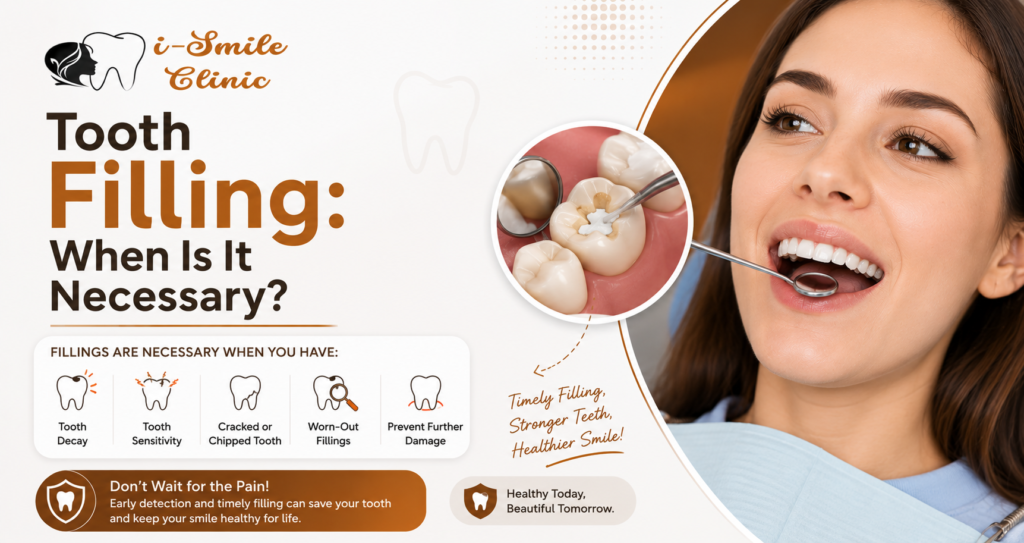
A small cavity may not seem like a big problem—especially when it does not hurt. But tooth decay does not always announce itself with pain. In many cases, a dentist may recommend a tooth filling before the decay becomes larger, deeper or more difficult to treat.
A dental filling is one of the most common restorative treatments used to repair a tooth affected by decay or minor damage. It removes the damaged portion of the tooth and restores the area so the tooth can function normally again.
But when exactly do you need a filling? How painful is a tooth filling? And how long does filling on your teeth last?
Let’s break down what you need to know before deciding whether a filling is right for your tooth.
What Is a Tooth Filling?
A tooth filling is a restorative dental treatment used to repair a tooth after decay or damage has created a cavity.
During the procedure, your dentist removes the decayed portion of the tooth, cleans the affected area and fills the space with a suitable dental material. The filling restores the tooth’s shape and helps prevent the cavity from continuing to grow.
Common filling materials include:
- Tooth-coloured composite resin
- Amalgam
- Glass ionomer
- Other specialised restorative materials
The best material depends on factors such as the location and size of the cavity, your oral health, aesthetic preferences and your dentist’s recommendation.
When Is a Tooth Filling Necessary?
A filling is generally considered when tooth decay has created a cavity that requires restoration.
Here are some common situations where your dentist may recommend one.
1. You Have a Cavity
The most common reason for a filling is tooth decay.
Bacteria in dental plaque can produce acids that gradually damage the tooth’s hard tissues. If decay creates a cavity, simply brushing cannot rebuild the missing tooth structure.
A filling can restore the damaged area and help preserve the natural tooth.
2. You Have a Small or Moderate Tooth Fracture
A filling may sometimes be used to repair a minor chip or fracture, depending on the extent and location of the damage.
Larger fractures may require a different restorative option, such as a crown.
3. You Have Worn or Damaged Tooth Structure
Teeth can sometimes develop areas of damage from factors such as grinding, erosion or other forms of wear.
Depending on the condition of the tooth, a dentist may use restorative material to rebuild a small damaged area.
4. You Have an Old Filling That Needs Replacement
Dental fillings are not necessarily permanent. They can eventually wear down, fracture, leak or develop recurrent decay around them.
Your dentist may recommend replacing an old filling if it is no longer providing an effective seal or if the tooth has developed additional decay.
Do You Always Need a Filling for Tooth Decay?
Not necessarily.
The appropriate treatment depends on how far the decay has progressed.
Very early changes to the tooth may sometimes be managed with preventive measures and fluoride, depending on the individual situation. Once a cavity has formed and tooth structure has been lost, a filling may be necessary to restore the tooth.
If decay has progressed deeply into the tooth and affected the pulp, a simple filling may no longer be sufficient. Your dentist may need to consider root canal treatment or another restorative procedure.
This is why regular dental check-ups matter—even when your teeth do not hurt.
How Painful Is a Tooth Filling?
One of the most common questions patients ask is:
“How painful is a tooth filling?”
For most people, getting a filling is relatively straightforward and should not be significantly painful.
Before treatment, your dentist can use a local anaesthetic to numb the area around the tooth. You may feel pressure or movement during the procedure, but you should not experience significant pain while the dentist is working.
After the filling, mild sensitivity or tenderness can occur for a short period. This is particularly possible when the cavity was deeper.
If you experience severe, persistent or worsening pain after a filling, contact your dentist. It may indicate that the tooth needs further evaluation.
What Happens During a Tooth Filling?
Understanding the procedure can make the experience feel much less intimidating.
Step 1: Examination
Your dentist examines the tooth and determines the extent of decay or damage. Dental X-rays may be recommended depending on the location and suspected depth of the problem.
Step 2: Numbing the area
If necessary, local anaesthetic is used to make the procedure comfortable.
Step 3: Removing decay
The dentist carefully removes the decayed portion of the tooth.
Step 4: Cleaning the tooth
The area is cleaned to remove debris and prepare the tooth for restoration.
Step 5: Placing the filling
The selected filling material is placed into the prepared area.
Step 6: Shaping and finishing
The dentist shapes the filling so it fits comfortably with your natural bite and finishes the restoration.
The entire process may take anywhere from a short appointment to longer depending on the size, location and complexity of the filling.
How Long Does Filling on Your Teeth Last?
Another common question is:
“How long does filling on your teeth last?”
There is no single lifespan for every filling.
The durability of a filling depends on the material used, the size and location of the restoration, your bite forces, oral hygiene and other factors.
For example, a filling in a tooth that experiences heavy chewing forces may experience more wear than one in an area exposed to less pressure.
A well-maintained filling can last for many years, but no filling should be considered permanently maintenance-free.
Regular dental examinations allow your dentist to check the condition of existing fillings and identify problems before they become more extensive.
Signs You May Need a Tooth Filling
Not every cavity causes obvious symptoms, but you may notice:
- Tooth sensitivity to hot or cold
- Sensitivity to sweet foods
- Food getting trapped in a particular area
- A visible hole or dark spot
- Toothache
- Pain when biting
- A rough or chipped area of a tooth
However, having no symptoms does not necessarily mean you have no cavities.
Early decay can sometimes be detected during a routine dental examination before you notice anything yourself.
What to Expect After a Tooth Filling
After receiving a filling, your tooth may feel slightly different for a short period.
You may experience:
- Temporary sensitivity
- Mild gum tenderness around the treated area
- A slightly unusual bite sensation
- Mild discomfort after the anaesthetic wears off
If your bite feels noticeably too high or uncomfortable after the numbness has disappeared, tell your dentist. A small adjustment may be needed.
For the best long-term results, continue brushing twice daily, clean between your teeth and attend regular dental check-ups.
How Can You Prevent Future Cavities?
A filling repairs existing damage, but it does not make your other teeth immune to decay.
Protect your teeth by:
- Brushing twice daily with fluoride toothpaste
- Cleaning between your teeth every day
- Limiting frequent sugary snacks and drinks
- Drinking water regularly
- Maintaining regular dental visits
- Replacing your toothbrush when appropriate
- Treating dental problems before they become larger
Your everyday oral-care routine plays a major role in protecting both natural teeth and existing restorations.
FAQs:
Is getting a filling better than leaving a cavity untreated?
If a cavity has formed, leaving it untreated can allow decay to progress deeper into the tooth. Depending on the severity, treatment may eventually require more extensive procedures than a simple filling.
How long does a tooth filling appointment take?
Treatment time varies according to the number of teeth being treated, the size and location of the cavities and the type of filling required. Your dentist can provide a more accurate estimate during your consultation.
Can a filling fall out?
Yes. Although fillings are designed to be durable, they can become damaged, worn or dislodged. If your filling falls out, contact your dentist rather than attempting to repair it yourself.
Can a tooth hurt after a filling?
Mild temporary sensitivity can occur after treatment. However, severe or persistent pain should be evaluated by your dentist.
Can a filling prevent further tooth decay?
A filling restores the damaged part of a tooth, but it does not prevent new decay elsewhere. Good oral hygiene and regular dental care remain essential.
Don’t Wait Until a Cavity Starts Hurting
A tooth does not always hurt when it needs attention.
A small cavity can gradually become a larger problem, potentially requiring more complex treatment. A timely tooth filling can help restore damaged tooth structure and preserve your natural smile.
At I-Smile Clinic, we assess your teeth carefully and recommend treatment based on the condition of your individual tooth—not simply the presence of a symptom.
If you have noticed sensitivity, a visible cavity, food getting trapped around a tooth or discomfort while biting, book a dental consultation with I-Smile Clinic.
The sooner you address tooth decay, the more opportunities you may have to preserve your natural tooth with simple restorative care.
Read More: