
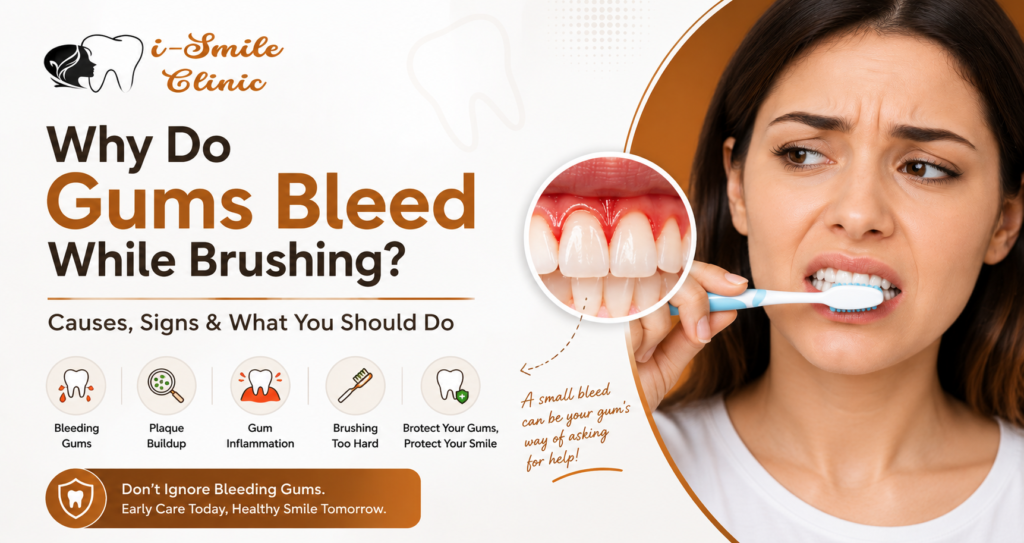
You finish brushing your teeth, rinse your mouth and notice a little pink or red in the sink. It is easy to think, “Maybe I brushed too hard.”
But if your gums bleed while brushing regularly, it is worth paying attention.
Bleeding gums are not usually something to ignore. They can be an early warning sign of gum inflammation, particularly when plaque builds up around the gumline. Other factors, including brushing technique, hormonal changes, certain health conditions and, less commonly, nutritional deficiencies, can also contribute.
The good news is that identifying the cause early can make gum problems much easier to manage.
Is It Normal to Bleed During Brushing Teeth?
No, regular bleeding during brushing is not considered normal.
Healthy gums generally should not bleed simply because you brush or clean between your teeth. Frequent bleeding can indicate inflammation known as gingivitis, which is the early stage of gum disease.
That does not mean every episode of bleeding automatically means you have serious gum disease. You may have irritated your gums by brushing too aggressively, or your gums may be reacting to plaque buildup.
However, if bleeding keeps happening, especially with redness, swelling, tenderness or bad breath, it is a good reason to arrange a dental check-up.
Why Do My Gums Bleed While Brushing?
1. Plaque Buildup
The most common reason is plaque.
Plaque is a sticky film of bacteria that constantly forms on your teeth. When it is not removed effectively, it can irritate the gum tissue and cause inflammation. The gums may become red, swollen and prone to bleeding.
Plaque that remains for too long can harden into tartar, which cannot be removed effectively with a toothbrush at home and requires professional cleaning.
2. Early Gum Disease
Bleeding gums can be one of the earliest visible signs of gingivitis.
At this stage, the gums may look red or swollen and bleed when you brush or clean between your teeth. The encouraging part is that plaque-related gingivitis can usually be reversed with appropriate daily oral care and professional treatment when necessary.
Ignoring the problem, however, can allow gum disease to progress.
3. Brushing Too Hard
More pressure does not necessarily mean cleaner teeth.
Using a hard-bristled toothbrush or aggressively scrubbing your gums can irritate the soft tissue and potentially contribute to bleeding.
Instead, use a soft-bristled toothbrush and gentle, controlled movements. Dental guidance recommends angling the bristles toward the gumline and using small, gentle motions rather than vigorous back-and-forth scrubbing.
4. Inconsistent Flossing or Interdental Cleaning
If you rarely clean between your teeth, plaque can accumulate in areas your toothbrush cannot reach.
When you suddenly start flossing, your gums may bleed because they are already inflamed. This does not mean you should simply stop cleaning between your teeth. Consistent, gentle interdental cleaning is an important part of controlling plaque.
5. Hormonal Changes
Hormonal changes can make gums more sensitive to plaque and inflammation. This can be particularly relevant during pregnancy and other periods of hormonal fluctuation.
If bleeding begins during a period of hormonal change, maintaining careful oral hygiene and discussing persistent symptoms with your dentist is important.
What Deficiency Causes Bleeding Gums When Brushing?
One frequently searched question is: “What deficiency causes bleeding gums when brushing?”
A severe vitamin C deficiency can cause problems affecting the gums. Vitamin C is important for healthy tissues and wound healing, and a prolonged deficiency can lead to scurvy.
However, vitamin deficiency is not the most common explanation for bleeding gums.
Plaque-related gingivitis is a much more common cause. Therefore, taking vitamin supplements simply because your gums bleed is not necessarily the right solution.
If you have other symptoms, dietary concerns or risk factors for nutritional deficiency, speak with a healthcare professional about whether testing is appropriate.
What Does Stage 1 Gum Disease Look Like?
The earliest stage of gum disease is generally called gingivitis.
So, what does stage 1 gum disease look like?
You may notice:
- Gums that bleed during brushing or flossing
- Red rather than healthy pink gum tissue
- Swollen or puffy gums
- Gum tenderness
- Persistent bad breath
- Plaque buildup around the gumline
At this stage, there may not be significant pain, which is one reason people sometimes overlook the condition.
The important thing is that early gingivitis is often manageable and reversible with improved oral hygiene and appropriate professional care.
If gum disease progresses into periodontitis, the tissues and bone supporting the teeth can become damaged. This can eventually contribute to gum recession, loose teeth and tooth loss.
How Can I Stop My Gums From Bleeding?
The right solution depends on the cause, but several habits can support healthier gums.
Brush twice a day
Use a fluoride toothpaste and a soft-bristled toothbrush. Focus on the gumline without applying excessive pressure.
Clean between your teeth
Use dental floss or an interdental brush once a day to remove plaque from areas a toothbrush cannot reach.
Don’t ignore professional cleaning
Once plaque hardens into tartar, brushing and flossing cannot remove it effectively. A dental professional can safely remove these deposits.
Maintain a balanced diet
A varied diet provides essential nutrients, including vitamin C, that support general health.
Avoid smoking
Smoking is an important risk factor for gum disease and can make treatment less successful.
When Should You See a Dentist for Bleeding Gums?
If your gums bleed repeatedly when you brush or floss, book a dental examination rather than waiting for the problem to disappear.
You should be particularly prompt if bleeding occurs alongside:
- Red or swollen gums
- Persistent bad breath
- Gum recession
- Tooth sensitivity
- Painful gums
- Loose teeth
- A change in your bite
- Persistent swelling or an unpleasant taste
The NHS specifically recommends seeing a dentist if your gums bleed during brushing or eating, or if they are painful and swollen.
A dentist can examine your gums, check for plaque and tartar, assess the spaces around your teeth and determine whether you have gingivitis or a more advanced periodontal problem.
FAQs:
Should I stop brushing if my gums bleed?
No. Stopping brushing can allow more plaque to accumulate. Instead, use a soft-bristled toothbrush and gentle technique. If bleeding continues, have your gums examined by a dental professional.
Can bleeding gums heal on their own?
If bleeding is caused by early plaque-related gingivitis, improving oral hygiene and receiving appropriate professional care can help the gums return to a healthier state. Persistent bleeding should still be evaluated rather than assumed to be harmless.
Is bleeding gums always a sign of gum disease?
Not necessarily. Brushing too aggressively, hormonal changes, certain health conditions and nutritional deficiencies can also contribute. However, recurring bleeding is a reason to have your gums assessed.
How long can I wait if my gums keep bleeding?
Do not ignore recurring bleeding for weeks or months. Arrange a dental check-up, particularly if other symptoms are present.
Don’t Ignore the Warning Signs Your Gums Are Giving You
A small amount of blood in the sink may seem insignificant, but repeated bleeding gums can be your mouth’s early warning system.
In many cases, the cause is plaque-related inflammation and early gum disease. With the right dental care and consistent oral hygiene, early problems can often be managed before they become more serious.
At I-Smile Clinic, we can examine your gums, identify the likely cause of bleeding and recommend appropriate treatment based on your oral health needs.
If your gums regularly bleed while brushing, don’t wait for pain to appear. Book a dental consultation with I-Smile Clinic and take action towards healthier gums and a stronger smile.
Read More: